Overview
📹 Video: Eckhart Tolle | 👨💼 Expert: Eckhart Tolle
🎯 Topic: Accessing presence and inner stillness beyond mental clutter
⏱️ Key Takeaway: The stillness and spaciousness you seek is already within you — you don’t achieve it, you discover it by momentarily stepping out of the stream of thinking
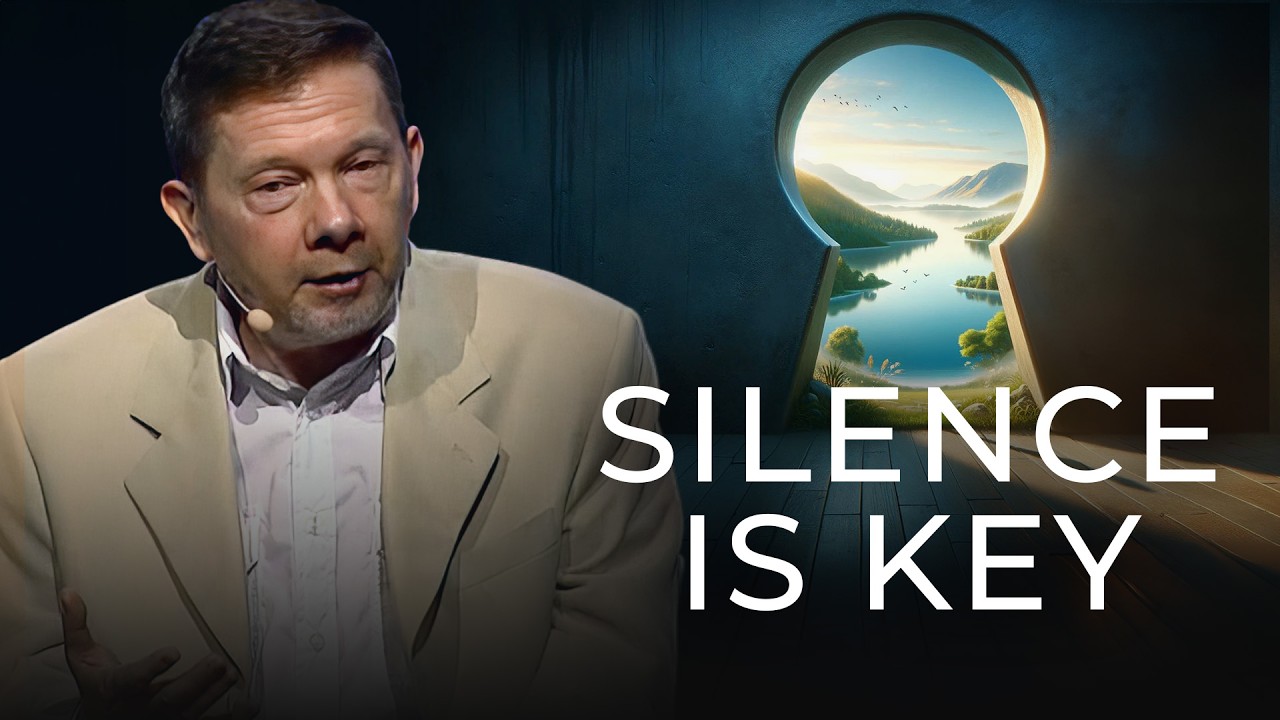
Who Are You Without Your Past?
- Tolle opens with a simple but disorienting question: Can you sense who you are without any reference to your personal history?
- You don’t need your name, your email address, or your memories to know that you exist — there is a sense of pure beingness underneath all of that
- The true answer to “Who am I?” has no thought in it — it is a felt sense of presence, not a concept
- When the stream of thinking briefly subsides, you become completely present: you can see, hear, and perceive — and your mind is still
Stillness Is Already There
- Most people assume stillness is something to work toward — a destination after years of practice
- Tolle’s core teaching: stillness is already within every human being — it just needs to be uncovered, not created
- Anyone who isn’t completely miserable 100% of the time already has some access to this stillness, even if they don’t recognize it
- Those brief “good” moments — petting a dog, looking at a night sky, being absorbed in physical activity — are all moments when the stream of thinking temporarily stopped
Why Pets and Nature Help
- Animals free you from your mind: Dogs and cats don’t have judgments or opinions about you — being with them briefly quiets the conceptual, evaluating mind
- Nature creates inner spaciousness: Looking at a vast sky, a forest, or the stars mirrors back a spaciousness that temporarily stills the mind
- Tolle shares that as a teenager in Spain, staring at the night sky was his first meditation — he didn’t know it at the time, but there were no thoughts during those moments
- Physical activity works the same way: when total presence is required by what you’re doing, there’s not enough left for thinking
The Problem with Technology and Mental Clutter
- Modern devices continuously clutter the mind — 99 out of 100 text messages, notifications, and social media updates add noise without meaning
- The naturally occurring spaciousness that used to happen when you simply had to sit and wait has all but disappeared
- Tolle warns that for people who are not awakening spiritually, mental clutter is getting worse — and the long-term civilizational effects are unknown
- The irony: the phone you reach for in a quiet moment is what prevents the spaciousness that makes you feel well
Decluttering the Mind Is Instant — Not a Process
- Unlike decluttering a room (where you must evaluate each item), decluttering the mind is an instant withdrawal from thinking
- It doesn’t require following a course of action for 10 years — it can happen right now
- Looking at the sky is one gateway: the sky’s vastness reflects an inner spaciousness back to you
- Tolle connects this to Jesus’s teaching: “The kingdom of heaven does not come with signs to be perceived… the kingdom of heaven is within you”
- In most languages, “heaven” and “sky” are the same word — Tolle translates “kingdom of heaven” as the dimension of spaciousness within you
What Finding Presence Does (and Doesn’t) Do
- Common misconception: spiritual awakening means life’s challenges disappear
- Reality: life continues to be challenging — that’s the nature of being alive for any life form, and more evolved beings face more complex challenges
- What changes is how you respond to challenges:
- You stop amplifying small problems into catastrophic ones
- You stop reacting unconsciously and seeing yourself as a victim
- You take action where needed, or accept what is when action isn’t possible
- The challenges of life actually deepen presence — when spiritually awakening, a difficult moment becomes an invitation to be more intensely present rather than a reason to collapse into unhappiness
The Insufficiency of Getting What You Want
- Tolle addresses the common belief that external achievement brings lasting happiness: fame, money, recognition
- He’s spoken with people who achieved exactly what they wanted — and reports that unhappiness resurfaces quickly after the initial elation
- External circumstances can never permanently satisfy because the mind’s craving and resistance are the source of suffering, not the circumstances themselves
Practical Ways to Access Presence
- Look at the sky — the vastness creates inner spaciousness
- Be with animals — their non-judgmental consciousness briefly quiets your conceptual mind
- Physical activity — anything that requires total presence (swimming, climbing) removes the surplus attention needed for thinking
- Notice the gap — simply observe the brief moment between thoughts; resting there is enough
- Put the phone down — allow naturally occurring spaciousness to happen rather than filling every quiet moment with stimulation
Conclusion
- The dimension of presence — what Tolle calls “inner spaciousness” — is the single most important discovery a human being can make
- It doesn’t solve every problem, but it changes your relationship to every problem: challenges are no longer amplified, and you face life from a stable, aware foundation
- The good news: you don’t have to earn it or work for it — it is already the essence of who you are. You only have to discover it.
Resources:
- Eckhart Tolle’s channel: youtube.com/@EckhartTolle
-
Books: The Power of Now A New Earth